
 U.S. Visa
 Canada eTA
 Schengen Visa
 New Zealand eTA
 United Kingdom eTA
 Australia eVisitor
 Vietnam eVisa
 Egypt eVisa
 Singapore Arrival Card
 Sri Lanka eVisa



--------- Spain’s Bold Immigration Pivot: Legalization Plan Signals a New Direction for Europe
Apr 11, 2026
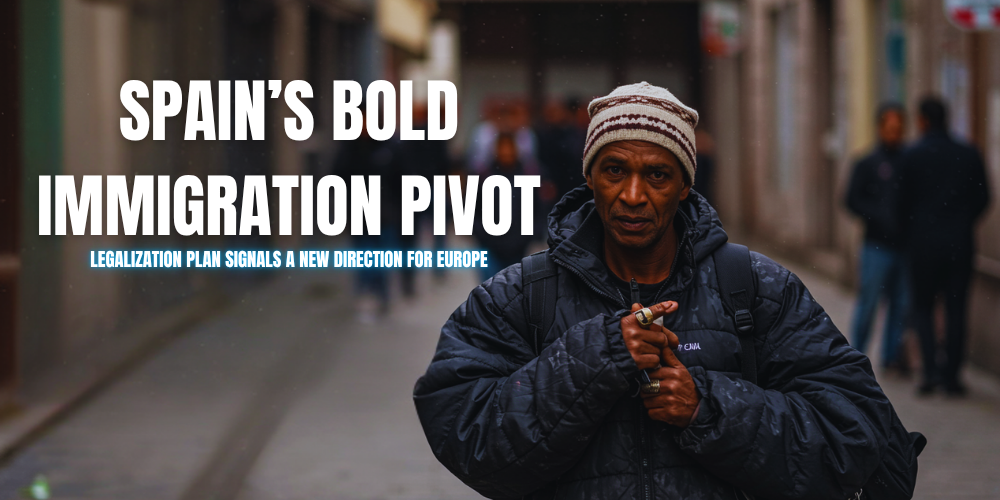
In a moment when much of Europe is tightening its borders and hardening migration policies, Spain is making a sharply different move—one that could reshape the continent’s immigration narrative.
The Spanish government is preparing to regularize up to 500,000 undocumented migrants, granting them temporary legal status. It’s a policy shift that doesn’t just stand out—it directly challenges the prevailing trend across the European Union.
A Strategic Shift, Not Just a Humanitarian Gesture
Spain’s plan isn’t framed purely as humanitarian relief. At its core, it’s an economic play.
The country is grappling with:
- Persistent labor shortages in key sectors like agriculture, construction, and hospitality
- An aging population that’s shrinking the domestic workforce
- The need to sustain long-term economic growth
By bringing undocumented migrants into the formal economy, Spain aims to:
- Expand its tax base
- Stabilize critical industries
- Reduce informal labor exploitation
In policy terms, this is labor-market regularization—not just immigration reform.
How the Legalization Program Works
While final implementation details are still unfolding, the framework is expected to include:
- Temporary residency permits for eligible undocumented migrants
- Proof of continuous stay in Spain
- Demonstrated employment or economic contribution potential
Once legalized, migrants would gain:
- Access to formal employment contracts
- Eligibility for social services
- Legal protection under Spanish labor laws
This transition from shadow economy to regulated workforce is central to the plan’s design.
Europe Moves Right—Spain Moves Forward
Across Europe, the direction has been clear:
- Stricter asylum policies
- Increased border enforcement
- Political pressure to reduce migration flows
Countries like Italy and France have leaned toward tighter controls, while EU-wide systems like biometric border tracking signal a more securitized approach.
Spain, however, is breaking from that pattern.
Instead of asking how to keep migrants out, Spain is asking:
How can migrants already here support the economy?
That reframing is what makes this policy significant.
Economic Impact: A Calculated Bet
If executed effectively, the upside could be substantial:
- Higher tax revenues from newly formalized workers
- Reduced pressure on underground labor markets
- Improved worker protections and wage standards
But the risks are equally real:
- Political backlash domestically and across Europe
- Administrative strain in processing large-scale applications
- Potential “pull factor” concerns—encouraging more migration
Spain is effectively betting that economic pragmatism will outweigh political resistance.
What This Means for Migrants
For undocumented migrants already in Spain, this could be life-changing:
- A pathway out of legal uncertainty
- Access to stable employment
- Integration into mainstream society
It also signals something broader: a recognition that migrants are not just a policy challenge—but an economic asset.
Could This Influence the Rest of Europe?
Spain’s move may remain an outlier—or it could become a test case.
If successful, other EU countries facing similar demographic and labor pressures may be forced to reconsider their stance. If it fails, it could reinforce the current trend toward restriction.
Either way, Spain has shifted the conversation.
The Bottom Line
At a time when immigration policy across Europe is defined by control and deterrence, Spain is taking a different route—one grounded in economic necessity and workforce reality.
This isn’t just an immigration story.
It’s a preview of how demographic pressure may force governments to rethink migration—not as a burden, but as a solution.
FAQ Section
1. What is Spain’s new immigration legalization plan?
Spain is proposing a policy to grant temporary legal status to up to 500,000 undocumented migrants currently living in the country. The goal is to bring more workers into the formal economy while addressing labor shortages.
2. Who qualifies for Spain’s legalization program?
While final criteria are still being defined, applicants will likely need to show:
- Proof of continuous residence in Spain
- Evidence of employment or ability to work
- A clean or reviewable legal record
Eligibility rules will be set by the Spanish government once the program is fully rolled out.
3. Why is Spain taking this approach instead of tightening immigration?
Unlike many countries in the European Union, Spain is responding to:
- Labor shortages
- An aging population
- Economic growth needs
The policy is designed to strengthen the workforce, not just control migration.
4. Will this policy affect immigration across Europe?
Potentially. If Spain’s plan proves successful, other EU countries may explore similar strategies. However, many nations are currently focused on stricter border controls, so widespread adoption is not guaranteed.
5. Does this mean more migrants will move to Spain?
That’s a key concern. Critics argue the policy could create a “pull factor,” encouraging more migration. Supporters, however, say the plan mainly targets migrants already living in Spain, not new arrivals.
Recent Articles

U.S. May End “Duration of Status” for International Students: What It Could Mean in 2026
International students in the United States may soon face one of the most consequential immigration
U.S. Immigration Tightens Again: What “Enhanced Security Checks” Mean for Applicants in 2026
The United States has just added another layer to its already tightening immigration system—and th
Spain’s Bold Migration Gamble: Opportunity, Bottlenecks, and a Divided Nation
In a Europe increasingly defined by tighter borders, Spain is doing something radically different—

Australia’s Immigration Debate Heats Up: Policy, Politics, and the Battle Over “Values”
Australia’s immigration debate has taken a sharper, more polarised turn after the opposition Coali
Spain’s Bold Immigration Pivot: Legalization Plan Signals a New Direction for Europe
In a moment when much of Europe is tightening its borders and hardening migration policies, Spain is

Europe’s New Entry/Exit System (EES): What Travelers Need to Know in 2026
The ink stamp is fading into history. In its place? Cameras, scanners, and a system that remembers e
Read More
U.S. May End “Duration of Status” for International Students: What It Could Mean in 2026
U.S. Immigration Tightens Again: What “Enhanced Security Checks” Mean for Applicants in 2026
Spain’s Bold Migration Gamble: Opportunity, Bottlenecks, and a Divided Nation
Australia’s Immigration Debate Heats Up: Policy, Politics, and the Battle Over “Values”
Spain’s Bold Immigration Pivot: Legalization Plan Signals a New Direction for Europe
Europe’s New Entry/Exit System (EES): What Travelers Need to Know in 2026

Welcome to the VisaTravel blog. We know that navigating the maze of visa applications and online forms can be as tricky as choosing the perfect travel playlist (which is all we want you worrying about anyway).
Throughout our years of experience, though, we’ve uncovered a mountain of knowledge which, via this blog, we’re sharing with you! Whether you're diving into the world of travel visas, wondering about the ESTA online hustle, or just trying to figure out the DS160 form, think of us as your online concierge, here to make the process easy and most of all, clear.
At this point in our global context, who has time for endless paperwork and confusing legal jargon? No one. That's why we're all about spilling the tea on online visa hacks, easier-to-work-with DS160 forms, and giving you tips on everything from tourist visas to immigration, to that last-minute ESTA online adventure.
So, just plug in a word you’re curious about on the search bar, and boom. We've got the tips, tricks, and insider info to help you (and anyone else you may be traveling with) get to your travel destination with the confidence of a seasoned traveler.
Now go explore!