
 U.S. Visa
 Canada eTA
 Schengen Visa
 New Zealand eTA
 United Kingdom eTA
 Australia eVisitor
 Vietnam eVisa
 Egypt eVisa
 Singapore Arrival Card
 Sri Lanka eVisa



--------- Form I-485 Explained: Adjustment of Status for Asylum and Refugee Applicants
Dec 29, 2025
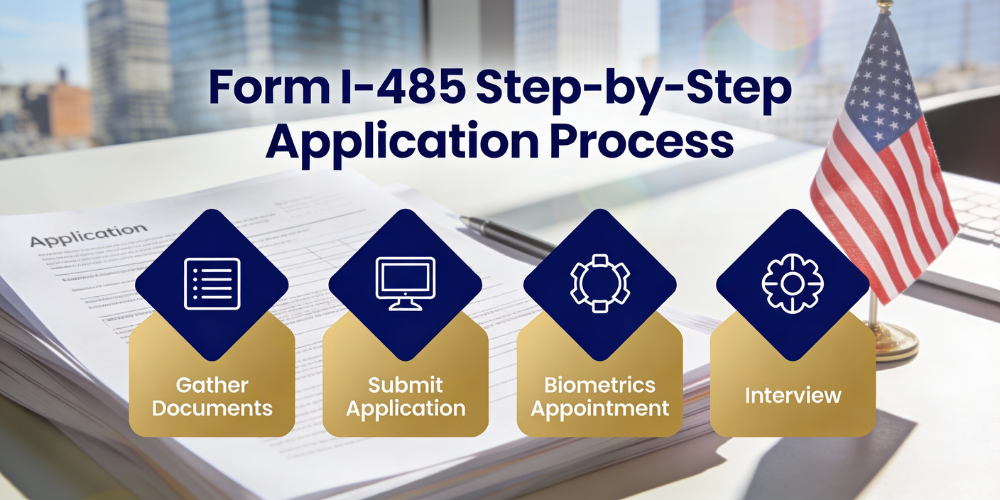
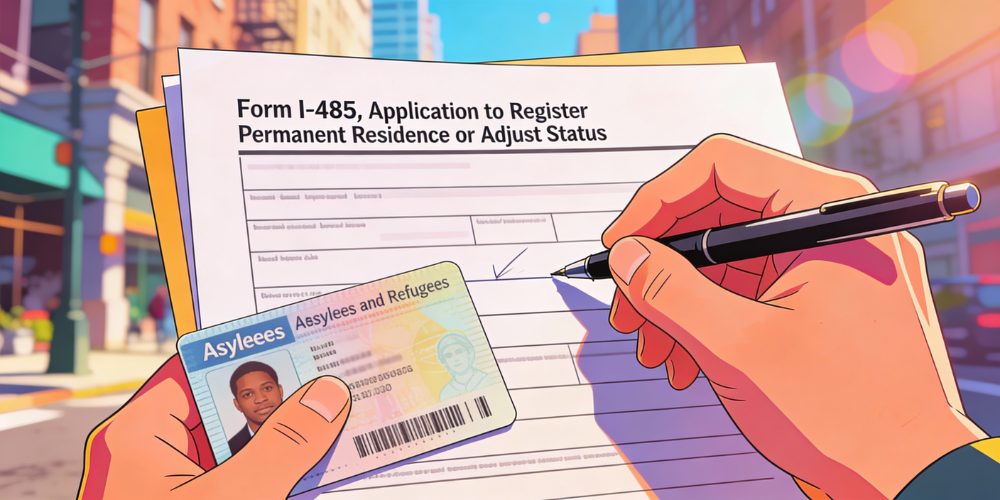
Form I-485, Application to Register Permanent Residence or Adjust Status, is the statutory mechanism that allows eligible asylees and refugees to obtain lawful permanent resident (LPR) status—commonly known as a green card—while remaining in the United States. For individuals granted humanitarian protection, adjustment of status represents a critical transition from temporary protection to long-term legal stability.
Lawful permanent residence confers significant benefits, including unrestricted employment authorization, enhanced travel rights, eligibility for derivative family unity, and eventual eligibility for U.S. citizenship. Without filing Form I-485, asylum or refugee status does not convert into permanent residence.
This guide is intended for individuals granted asylum in the United States and those admitted as refugees under U.S. immigration law. While both groups are eligible to adjust status after one year of physical presence, the governing legal standards and procedural considerations differ in important ways.
What Is Form I-485 for Asylees and Refugees?
Form I-485 enables USCIS to determine whether an asylee or refugee is eligible for lawful permanent residence under the Immigration and Nationality Act (INA). Adjustment for these populations is governed by specific statutory provisions that reflect their humanitarian admission.
- Refugees adjust status under INA § 209(a)
- Asylees adjust status under INA § 209(b)
Unlike family-based or employment-based adjustment applicants, asylees and refugees are exempt from immigrant visa quotas, labor certification requirements, and sponsorship by a petitioner. However, USCIS conducts a full review of admissibility at the adjustment stage, including criminal, security, and immigration-related grounds.
Notably, many admissibility issues are evaluated for the first time during adjustment of status, even if they did not prevent the initial grant of asylum or refugee admission.
One-Year Physical Presence Requirement
Both asylees and refugees must satisfy a one-year physical presence requirement before filing Form I-485.
- Asylees: The one-year period begins on the date asylum is granted.
- Refugees: The one-year period begins on the date of admission to the United States as a refugee under INA § 207.
Physical presence requires actual time spent in the United States. Short, authorized trips abroad do not automatically disrupt eligibility, but extended or undocumented travel may raise eligibility concerns. Applicants should retain clear records of travel authorization, reentry, and continued U.S. residence.
Eligibility Requirements for Asylees
To qualify for adjustment of status, an asylee must:
- Have been granted asylum and remained physically present in the U.S. for at least one year
- Continue to meet the refugee definition, including a well-founded fear of persecution
- Not having firmly resettled in another country
- Not have had asylum status terminated
- Be admissible or qualify for a waiver of inadmissibility
USCIS expects asylees to file Form I-485 within two years of the asylum grant, although late filings may be excused for exceptional circumstances such as serious illness.
Derivative asylees (spouses and unmarried children under 21) may adjust status based on the principal asylee but must file separate applications and independently satisfy eligibility requirements.
Eligibility Requirements for Refugees
Refugees may apply for adjustment of status if they:
- Were lawfully admitted to the U.S. under INA § 207
- Have been physically present in the U.S. for at least one year
- Have not already obtained lawful permanent resident status
- Have not had refugee status terminated
- Are admissible or eligible for a waiver
Certain inadmissibility grounds—most notably public charge and labor certification—do not apply to refugees. Humanitarian waivers are available for some grounds of inadmissibility, but not for serious national security concerns or controlled substance trafficking.
Derivative refugee family members must also file individually and meet all statutory requirements.
Required Forms and Supporting Documents
A complete I-485 application typically includes:
- Form I-485 (Application to Adjust Status)
- Biographic and identity documents (birth certificate, passport, ID)
- Form I-693 (Medical Examination)
- Proof of asylum or refugee status (approval notice or Form I-94)
- Evidence of one year of physical presence
- Travel records, if applicable
- Filing fees or fee waiver request
USCIS may require biometrics even when filing fees are waived.
Step-by-Step Application Process
- Prepare Form I-485 and supporting documentation
- File the application with USCIS
- Receive receipt notice
- Attend a biometrics appointment
- Undergo security and admissibility review
- Respond to any Requests for Evidence (RFEs)
- Attend the interview, if required
- Receive approval and green card issuance
Asylees and refugees are not subject to visa number backlogs, allowing approval once eligibility is confirmed.
Special Considerations for Derivative Family Members
Derivative eligibility depends entirely on the principal applicant’s status. Applicants must provide valid proof of the qualifying family relationship and may file concurrently or separately, depending on case strategy.
Common Issues and Pitfalls
- Insufficient evidence of physical presence
- Unauthorized or poorly documented travel
- Unaddressed inadmissibility issues
- Late filings without a credible justification
Early legal review can often prevent these issues from resulting in denial.
Helpful Resources and Official Guidance
- USCIS Policy Manual – Asylee Adjustment
- USCIS Policy Manual – Refugee Adjustment
- Immigration Equality Asylee Manual
- Tahirih Justice Center I-485 Checklist
Adjustment of status under Form I-485 is a vital step for asylees and refugees seeking permanent residence in the United States. While the statutory framework offers significant advantages, success depends on careful documentation, timely filing, and a thorough understanding of admissibility requirements. Consulting official USCIS guidance—or experienced immigration counsel—can significantly reduce risk and delay.
FAQ
Q: When can an asylee file Form I-485?
A: One year after asylum is granted, provided the applicant meets physical presence and admissibility requirements.
Q: Do refugees need a sponsor to adjust status?
A: No. Refugees adjust under INA §209(a) and do not require a family or employer sponsor.
Q: Is there a visa backlog for asylees and refugees?
A: No. Adjustment is not subject to immigrant visa quotas.
Q: Can derivative family members apply separately?
A: Yes. Each derivative must file an individual Form I-485.
Recent Articles

Top Digital Nomad Visas in 2026 (Portugal, Croatia, Estonia & More)
Remote work isn’t a trend anymore — it’s infrastructure. By 2026, governments aren’t just to

Seasonal Travel Planning: Spring in Europe (Visa Tips Included)
Spring—stretching from March through May—hits a sweet spot many travelers overlook. The continen

Best Schengen Countries to Visit with One Visa
A Schengen visa is one of the most powerful travel documents for exploring Europe. With a single app
ETIAS Explained: Europe’s New Travel Authorization System
Europe is shaking up short-stay travel, and if you’ve ever zipped across the continent visa-free,
7 Common U.S. Visa Mistakes That Cause Delays or Rejection
U.S. visa delays and refusals are rarely caused by a single dramatic mistake. More often, they stem
ESTA Explained: Who Needs It and How to Apply in 2026
The ESTA—short for Electronic System for Travel Authorization—is the quiet gatekeeper behind vis
Read More
Top Digital Nomad Visas in 2026 (Portugal, Croatia, Estonia & More)
Seasonal Travel Planning: Spring in Europe (Visa Tips Included)
Best Schengen Countries to Visit with One Visa
ETIAS Explained: Europe’s New Travel Authorization System
7 Common U.S. Visa Mistakes That Cause Delays or Rejection
ESTA Explained: Who Needs It and How to Apply in 2026

Welcome to the VisaTravel blog. We know that navigating the maze of visa applications and online forms can be as tricky as choosing the perfect travel playlist (which is all we want you worrying about anyway).
Throughout our years of experience, though, we’ve uncovered a mountain of knowledge which, via this blog, we’re sharing with you! Whether you're diving into the world of travel visas, wondering about the ESTA online hustle, or just trying to figure out the DS160 form, think of us as your online concierge, here to make the process easy and most of all, clear.
At this point in our global context, who has time for endless paperwork and confusing legal jargon? No one. That's why we're all about spilling the tea on online visa hacks, easier-to-work-with DS160 forms, and giving you tips on everything from tourist visas to immigration, to that last-minute ESTA online adventure.
So, just plug in a word you’re curious about on the search bar, and boom. We've got the tips, tricks, and insider info to help you (and anyone else you may be traveling with) get to your travel destination with the confidence of a seasoned traveler.
Now go explore!