 U.S. Visa
 Canada eTA
 Schengen Visa
 New Zealand eTA
 United Kingdom eTA
 Australia eVisitor
 Vietnam eVisa
 Egypt eVisa
 Singapore Arrival Card
 Sri Lanka eVisa



--------- 7 Common U.S. Visa Mistakes That Cause Delays or Rejection
Feb 11, 2026
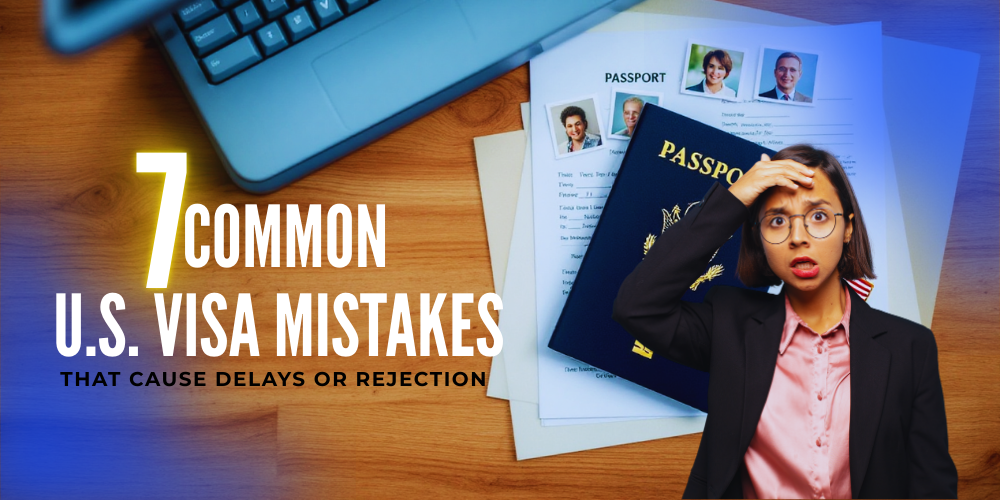
U.S. visa delays and refusals are rarely caused by a single dramatic mistake. More often, they stem from small but critical errors—a missing field, an unclear document, or an answer that doesn’t fully align with the application. These issues can trigger Requests for Evidence (RFEs), prolonged administrative processing, or outright refusals at the consular window.
Consular officers are trained to evaluate three core elements in every application: credibility, intent, and documentation. They assess whether your story makes sense, whether your purpose fits the visa category, and whether your documents consistently support what you’ve declared on your forms and in your interview. Even minor inconsistencies can raise doubts, especially in high-volume embassies where decisions are made quickly.
This guide is designed for non-immigrant visa applicants, including tourist (B-1/B-2), student (F-1), exchange (J-1), work (H-1B, L-1), and other temporary visa categories. Whether you’re applying for the first time or reapplying after a refusal, understanding these common mistakes can significantly improve your chances.
Mistake #1: Incomplete or Inaccurate DS-160 and Visa Forms
What Goes Wrong
One of the most frequent and preventable problems is submitting incomplete or inaccurate visa forms, especially the DS-160. Common issues include:
- Leaving required fields blank or selecting incorrect options
- Entering wrong passport numbers, issue dates, or expiration dates
- Providing inconsistent travel dates, employment history, or addresses
- Mismatches between the current application and previous visa records
Because the DS-160 becomes the foundation of your entire case, any error—no matter how small—can follow you into the interview and beyond.
Why It Causes Delays or Rejection
When form data is incorrect or inconsistent, consular officers may struggle to verify your identity or travel history. This can result in:
- Administrative processing while information is reviewed
- Requests for Evidence (RFEs) to clarify discrepancies
- Doubts about accuracy or truthfulness, which directly impact credibility
Inconsistencies between current and prior applications are especially sensitive, as they may suggest carelessness or misrepresentation—even if the mistake was unintentional.
How to Avoid This Mistake
To reduce risk at the very first stage:
- Perform a line-by-line cross-check of the DS-160 against your passport, previous visas, and travel history before submission
- Use official embassy instructions and sample formats when completing forms
- Save and review a PDF copy of your DS-160 confirmation to ensure consistency during the interview
Accuracy at this stage sets the tone for how the entire application is evaluated.
Mistake #2: Submitting Insufficient or Unverified Supporting Documents
Common Documentation Gaps
Many applicants assume that submitting “some” documents is enough. In reality, missing or weak supporting evidence is a leading cause of refusals. Typical gaps include:
- No clear proof of financial capacity or income source
- Weak or outdated employment letters or school enrollment documents
- Documents submitted without required translations or certifications
Photocopies without verification or documents that lack context often fail to carry evidentiary weight.
How Consular Officers Interpret Missing Documents
When key documents are absent or unclear, officers may conclude that:
- You lack sufficient financial means to support your stay
- Your stated travel purpose is not credible or well-defined
- You do not fully meet the requirements of the visa category applied for
In tourist and student visas, especially, missing documentation can quickly translate into concerns about overstay risk or improper intent.
How to Avoid This Mistake
Strong documentation is both complete and legible. To avoid problems:
- Follow consulate-specific document checklists, not generic online lists
- Submit originals or notarized copies where required
- Ensure financial documents show consistent activity and clearly match the figures stated in your application
Well-organized, verifiable documents make it easier for officers to approve your case without hesitation.
Mistake #3: Failing to Prove Strong Ties to Your Home Country (INA 214(b))
What “Strong Ties” Mean in Practice
Under U.S. immigration law, most non-immigrant visa applicants are presumed to have immigrant intent unless they can demonstrate otherwise. “Strong ties” are the real-world obligations that compel you to return home after a temporary stay, such as:
- Employment: A stable job, approved leave, or ongoing professional role
- Family responsibilities: Immediate family members who depend on you or reside in your home country
- Property, education, or long-term obligations: Home ownership, active business interests, or current academic enrollment
These ties must be credible, current, and relevant—not hypothetical or easily abandoned.
Why This Leads to Refusals
When applicants fail to clearly establish strong ties, consular officers may conclude there is a risk of overstay or unauthorized immigration, resulting in a refusal under INA Section 214(b). Common triggers include:
- Presumed immigrant intent due to weak or undocumented home-country connections
- Overreliance on flight itineraries or hotel bookings, which do not prove an obligation to return
Travel plans alone do not outweigh the absence of meaningful personal or professional commitments at home.
How to Avoid This Mistake
To strengthen your case:
- Present concrete, verifiable evidence, such as employment letters, proof of enrollment, property records, or family documentation
- Ensure your explanation of ties is consistent across your application forms, supporting documents, and interview answers
A clear, logical narrative that demonstrates why you must return home is essential.
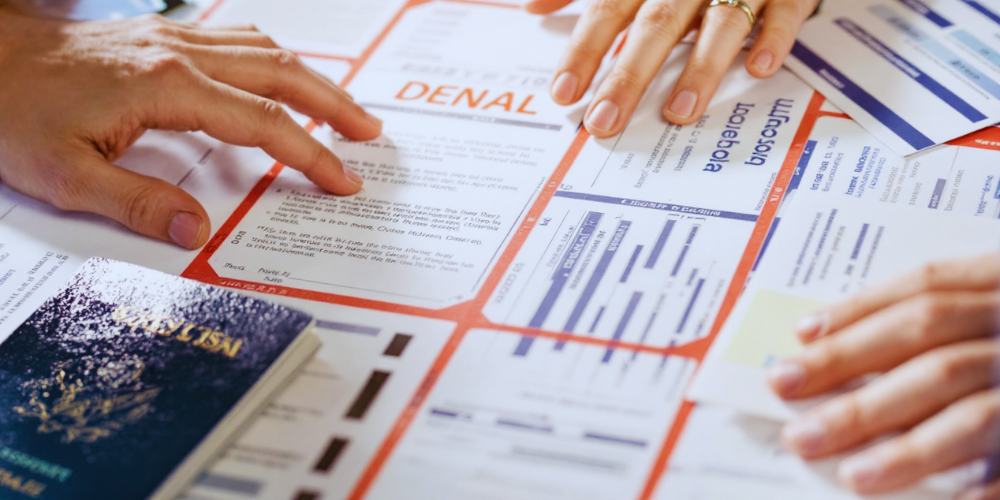
Mistake #4: Poor Preparation for the Visa Interview
Common Interview Errors
Many applicants underestimate the importance of the visa interview and approach it casually. Frequent mistakes include:
- Rambling or vague responses that lack focus
- Inventing details when unsure, instead of giving clear, factual answers
- Contradicting information already stated on the DS-160
These errors often arise from anxiety or lack of preparation and can quickly undermine credibility.
How Officers Evaluate Interview Responses
Consular officers are trained to conduct rapid consistency checks. They compare:
- Verbal answers against the DS-160 and submitted documents
- Tone, clarity, and confidence against known fraud indicators
Hesitation, over-explanation, or contradictions may signal uncertainty or misrepresentation, even when none was intended.
How to Avoid This Mistake
Effective interview preparation focuses on clarity, not memorization:
- Prepare concise explanations of your travel purpose, funding source, and return plans
- Practice answering questions out loud so responses sound natural, brief, and consistent
Simple, honest answers are far more persuasive than elaborate explanations.
Mistake #5: Inconsistencies Between Forms, Documents, and Interview Answers
Typical Inconsistencies
Inconsistencies—large or small—are among the most common reasons for heightened scrutiny. Examples include:
- Reported income that does not align with bank statements
- A stated travel purpose that conflicts with an invitation or support letter
- Mismatched dates, sponsor details, or employment information
Even minor discrepancies can raise concerns when viewed together.
Why Inconsistencies Are Red Flags
Consular officers rely heavily on internal consistency to assess credibility. When details don’t match, it can result in:
- Doubts about honesty or reliability
- Increased scrutiny or administrative processing
- Immediate refusal if credibility is sufficiently undermined
Inconsistency is often interpreted as risk, regardless of intent.
How to Avoid This Mistake
To prevent contradictions:
- Conduct a full cross-review of all forms, documents, and supporting letters before the interview
- Update applications and evidence if there have been recent life changes, such as a new job, school, or sponsor
A consistent, well-aligned application package significantly improves approval prospects
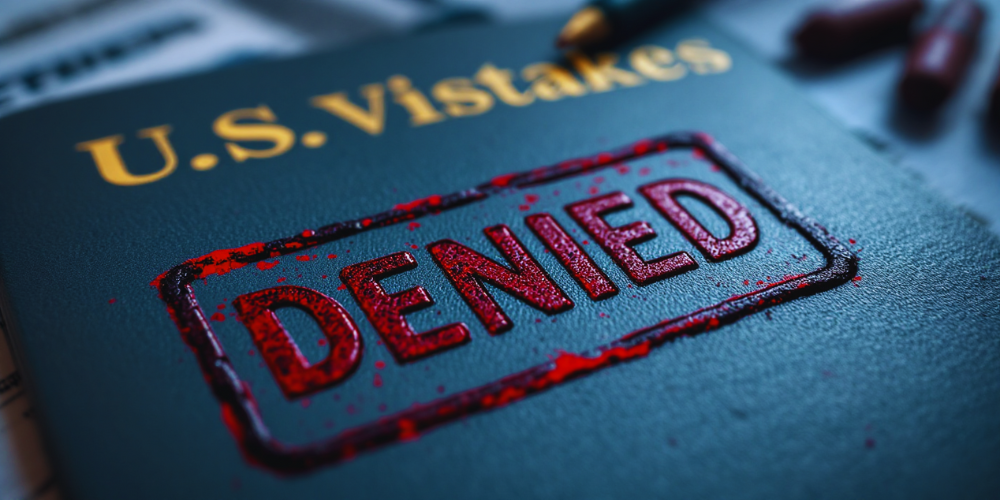
Mistake #6: Weak or Untruthful Financial Documentation
Financial Red Flags
Financial evidence plays a central role in many non-immigrant visa decisions. Certain patterns immediately raise concerns for consular officers, including:
- Large recent deposits that do not align with normal income patterns
- Newly opened bank accounts created shortly before the application
- Unverifiable sponsors whose income or relationship to the applicant is unclear
These red flags may suggest that funds were arranged solely for the visa application rather than reflecting genuine financial capacity.
How Officers Assess Financial Ability
Consular officers do not look only at account balances; they evaluate financial credibility over time. Key considerations include:
- A pattern of regular income, such as consistent salary deposits or business earnings
- The ability to fund the entire trip, including travel, accommodation, and daily expenses
- The authenticity of sponsorship, if someone else is covering costs
Financial documentation must support the applicant’s overall narrative and visa category.
How to Avoid This Mistake
To present strong financial evidence:
- Provide 3–6 months of bank statements showing stable, regular activity
- If using a sponsor, submit affidavits of support backed by real income proof, such as tax returns or pay slips
Transparent, well-documented finances reduce doubts and help officers reach a decision more quickly.
Mistake #7: Ignoring Previous Visa Issues, Overstays, or Criminal History
What Applicants Often Fail to Disclose
Some applicants believe past issues are irrelevant or undiscoverable. Common omissions include:
- Prior visa refusals, even from many years ago
- Overstays or status violations during previous U.S. visits
- Arrests or criminal convictions, regardless of outcome
Failure to disclose these issues is often more damaging than the issue itself.
Why Non-Disclosure Is Especially Risky
U.S. immigration systems rely on extensive database cross-checks. When discrepancies appear, they can lead to:
- Findings of fraud or willful misrepresentation
- Immediate refusal and possible permanent records
- Long-term inadmissibility consequences, far beyond a single visa application
Once credibility is compromised, future applications become significantly harder.
How to Avoid This Mistake
The safest approach is complete transparency:
- Provide full disclosure on all forms and during interviews, even if the issue seems minor
- Seek legal guidance when prior violations exist, especially if waivers or rehabilitation evidence may apply
Honest disclosure allows officers to assess eligibility accurately and fairly.
Final Takeaway: How to Strengthen Your U.S. Visa Application
Most U.S. visa refusals are preventable. The most common mistakes—incorrect forms, weak documents, poor interview preparation, inconsistent information, and incomplete disclosure—share a common theme: lack of preparation and consistency.
Successful applications demonstrate honesty, clarity, and alignment across every stage of the process. Before applying, verify the exact requirements for your visa category, review all materials carefully, and ensure your case tells one clear, credible story.
Recommended Resources & Further Reading
For deeper guidance and authoritative explanations, consult the following resources:
- Kodem Law – U.S. visa application mistakes and interview guidance
- Placement International – Common visa application errors and best practices
- Sherris Legal – Reasons for visa denials and how to avoid them
- Atlys – U.S. visa rejection reasons, especially B-1/B-2 and 214(b) refusals
- Goellaw – Legal insights into visa denials, inadmissibility, and misrepresentation
FAQ:
1. Can small mistakes really cause a U.S. visa to be denied?
Yes. Even minor errors—such as inconsistent dates, missing documents, or unclear answers—can raise credibility concerns and lead to delays, administrative processing, or refusal.
2. What is the most common reason U.S. visas are denied under INA 214(b)?
The most common reason is failure to prove strong ties to the applicant’s home country, leading officers to believe the applicant may overstay or immigrate unlawfully.
3. Do I need to bring all documents listed by the U.S. embassy?
Yes. Consular officers expect applicants to follow consulate-specific document requirements. Missing or weak documentation can result in refusal even if other parts of the application are strong.
4. What happens if my interview answers don’t match my DS-160?
Inconsistencies between your DS-160, documents, and interview answers can damage credibility and may result in denial or further scrutiny.
5. Should I disclose past visa refusals or overstays on my application?
Absolutely. U.S. immigration systems retain prior records, and failure to disclose past issues can lead to findings of fraud or long-term inadmissibility.
Recent Articles

Europe’s New Entry/Exit System (EES): What Travelers Need to Know in 2026
The ink stamp is fading into history. In its place? Cameras, scanners, and a system that remembers e
U.S. Immigration Is Tightening Fast—Here’s What It Means for You in 2026
If you’ve been following U.S. immigration trends, you’ve likely noticed a shift—and it’s not

Visa Tips for Work-From-Anywhere Travelers (2026 Digital Nomad Guide)
The Wi-Fi is strong. The coffee is stronger. You’re answering emails with sand between your toes,
How to Extend Your Stay Legally Beyond a Tourist Visa
At first, the trip feels endless.A few weeks wandering through Manhattan museums. A cross-country ro
Digital Nomad Visas Explained: Where Remote Workers Can Live in 2026
Picture a Tuesday morning that could be anywhere: a laptop open at a café in Lisbon, a coworking de
Top Digital Nomad Visas in 2026 (Portugal, Croatia, Estonia & More)
Remote work isn’t a trend anymore — it’s infrastructure. By 2026, governments aren’t just to
Read More
Europe’s New Entry/Exit System (EES): What Travelers Need to Know in 2026
U.S. Immigration Is Tightening Fast—Here’s What It Means for You in 2026
Visa Tips for Work-From-Anywhere Travelers (2026 Digital Nomad Guide)
How to Extend Your Stay Legally Beyond a Tourist Visa
Digital Nomad Visas Explained: Where Remote Workers Can Live in 2026
Top Digital Nomad Visas in 2026 (Portugal, Croatia, Estonia & More)
Welcome to the VisaTravel blog. We know that navigating the maze of visa applications and online forms can be as tricky as choosing the perfect travel playlist (which is all we want you worrying about anyway).
Throughout our years of experience, though, we’ve uncovered a mountain of knowledge which, via this blog, we’re sharing with you! Whether you're diving into the world of travel visas, wondering about the ESTA online hustle, or just trying to figure out the DS160 form, think of us as your online concierge, here to make the process easy and most of all, clear.
At this point in our global context, who has time for endless paperwork and confusing legal jargon? No one. That's why we're all about spilling the tea on online visa hacks, easier-to-work-with DS160 forms, and giving you tips on everything from tourist visas to immigration, to that last-minute ESTA online adventure.
So, just plug in a word you’re curious about on the search bar, and boom. We've got the tips, tricks, and insider info to help you (and anyone else you may be traveling with) get to your travel destination with the confidence of a seasoned traveler.
Now go explore!