 U.S. Visa
 Canada eTA
 Schengen Visa
 New Zealand eTA
 United Kingdom eTA
 Australia eVisitor
 Vietnam eVisa
 Egypt eVisa
 Singapore Arrival Card
 Sri Lanka eVisa



--------- U.S. May End “Duration of Status” for International Students: What It Could Mean in 2026
May 14, 2026
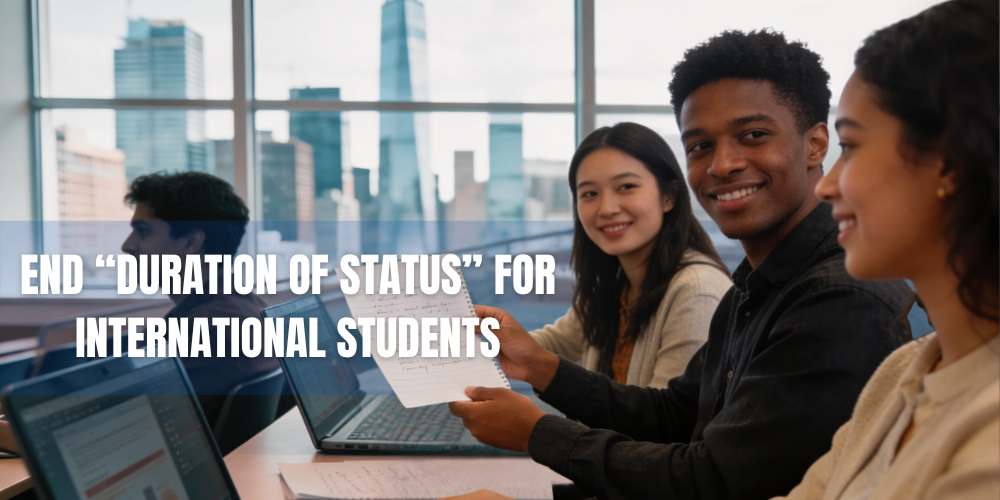
International students in the United States may soon face one of the most consequential immigration policy changes in years.
A proposed U.S. Department of Homeland Security rule would end the long-standing “duration of status” (D/S) system for many F, J, and I visa holders. If finalized, international students, exchange visitors, foreign media representatives, and their dependents would no longer be admitted for as long as they maintain a valid status. Instead, they would receive a fixed period of authorized stay.
That would mark a significant shift in how lawful presence is managed in the United States—and it could affect how students plan their degrees, extensions, travel, and long-term immigration compliance.
What is “Duration of Status”?
Under the current system, many students entering the U.S. on an F-1 student visa are admitted for the duration of their academic program, not for a specific end date.
In practical terms, this means a student can generally remain in the United States as long as they continue meeting visa requirements. Those requirements usually include:
- maintaining full-time enrollment
- making normal academic progress
- complying with school reporting requirements
- keeping immigration documents valid
Instead of a hard calendar expiration date controlling lawful stay, the student’s legal presence is linked to continued compliance with program rules.
For universities and international student offices, that framework has been the operational foundation of student immigration management for decades.
What Would Change Under the Proposed Rule?
If the proposed regulation takes effect, F, J, and I visa holders would receive a fixed admission period rather than a duration of status.
Although final details have not yet been formally published, current reporting indicates that many students could receive admission periods of up to four years, depending on visa category and individual circumstances.
At the end of that period, students who need more time to finish their studies may need to apply for an extension of stay with U.S. immigration authorities.
That is the key structural change.
Today, lawful presence often depends on remaining compliant with academic program rules. Under the proposed framework, lawful presence would also depend on not exceeding a defined admission end date.

Why This Matters for International Students
Academic timelines are often more flexible than visa timelines.
Students may need additional time for reasons such as:
- thesis or dissertation research
- laboratory delays
- medical leave
- transfer between schools
- changes in degree programs
- delayed course availability
- approved academic extensions
Under a fixed-period admission system, those ordinary academic realities could create added immigration complexity.
Instead of relying primarily on school-issued documentation, students may need formal government approval to remain in lawful status beyond the original admission period.
That introduces more administrative steps—and potentially more legal risk if deadlines are missed.
Unlawful Presence Could Become More Important
One of the most significant consequences may involve unlawful presence.
Under the current system, many F, J, and I visa holders generally do not begin accruing unlawful presence simply because academic dates change or a program extends.
Under a fixed-period framework, that could change.
If the authorized admission period expires and no extension has been approved, unlawful presence could begin automatically based on the expiration date.
That matters because unlawful presence can affect:
- future visa eligibility
- change-of-status requests
- re-entry to the United States
- long-term immigration options
For students, careful date tracking could become much more important than it is today.
Could Travel and Extensions Become More Complicated?
Potentially, yes.
If a fixed-term admission model is adopted, students may need to pay closer attention to timing when:
- traveling internationally
- changing academic programs
- transferring schools
- extending research timelines
- applying for optional practical training-related transitions
Extension applications could also introduce additional processing timelines and administrative uncertainty.
That does not mean international study becomes impossible—but it may become more procedural.
When Could This Change Take Effect?
The proposal is currently moving through the federal regulatory review process.
If approved, the rule would be published in the Federal Register, where final legal language and implementation timelines would be confirmed.
In many immigration rulemaking processes, operational changes may begin 30 to 60 days after publication, although timing can vary.
As of now, this is not yet a final operational rule.
That distinction matters. Students do not need to panic or assume immediate changes to their current lawful status.
What Should International Students Do Now?
There is no immediate filing requirement.
Still, this is a good moment to prepare.
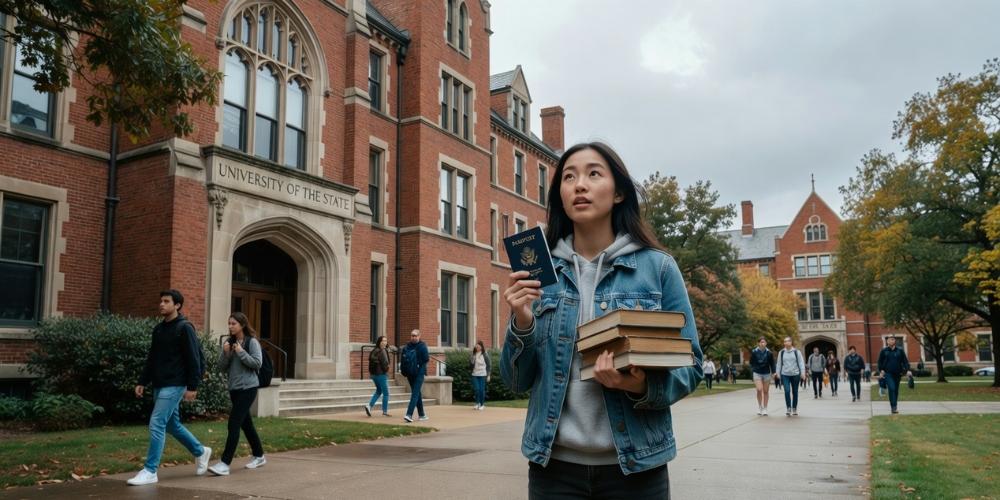
Review your immigration documents
Check the validity dates for:
- passport
- visa
- I-20
- DS-2019
Understand your academic timeline
Be realistic about expected graduation dates, research timelines, and any potential delays.
Talk with your international student office
If you expect to:
- change majors
- transfer schools
- take leave
- extend research
- need additional semesters
it is worth discussing those plans early.
Follow official updates
Watch for announcements from:
- U.S. Department of Homeland Security
- U.S. Citizenship and Immigration Services
- your university’s international office
Why Universities Are Watching Closely
For colleges and universities, this proposal could affect institutional workflows as much as student planning.
International offices may need to devote more resources to:
- extension advising
- deadline monitoring
- compliance tracking
- travel guidance
- case-specific immigration support
Because many U.S. institutions rely heavily on international student enrollment, operational changes could ripple across admissions, advising, and academic planning.
The Bottom Line
For years, the duration of status has been one of the defining features of the U.S. student visa system.
If the proposed rule is finalized, that model would shift toward fixed-term admission periods.
Students would still be able to study in the United States, but they may face:
- more formal deadlines
- more extension filings
- more administrative planning
- higher compliance sensitivity
For now, the most practical response is simple: stay informed, monitor timelines carefully, and watch for the final rule.
FAQ
What is “duration of status” in U.S. immigration?
Duration of status means a student is generally allowed to remain in the United States for as long as they maintain valid academic and immigration status, rather than being admitted until a fixed calendar date.
Which visa categories could be affected?
The proposed rule applies to F, J, and I visa holders, including many international students, exchange visitors, foreign media representatives, and dependents.
Would international students automatically have to leave after four years?
Not necessarily. Current reporting suggests many students may receive fixed admission periods of up to four years, but extensions may be available depending on circumstances and final regulatory details.
Is this rule already in effect?
No. It is currently a proposed regulatory change and has not yet become a final operational rule.
What should students do right now?
Students should review their documents, understand their academic timelines, and stay in close contact with their university’s international student office.
Recent Articles
U.S. May End “Duration of Status” for International Students: What It Could Mean in 2026
International students in the United States may soon face one of the most consequential immigration
U.S. Immigration Tightens Again: What “Enhanced Security Checks” Mean for Applicants in 2026
The United States has just added another layer to its already tightening immigration system—and th
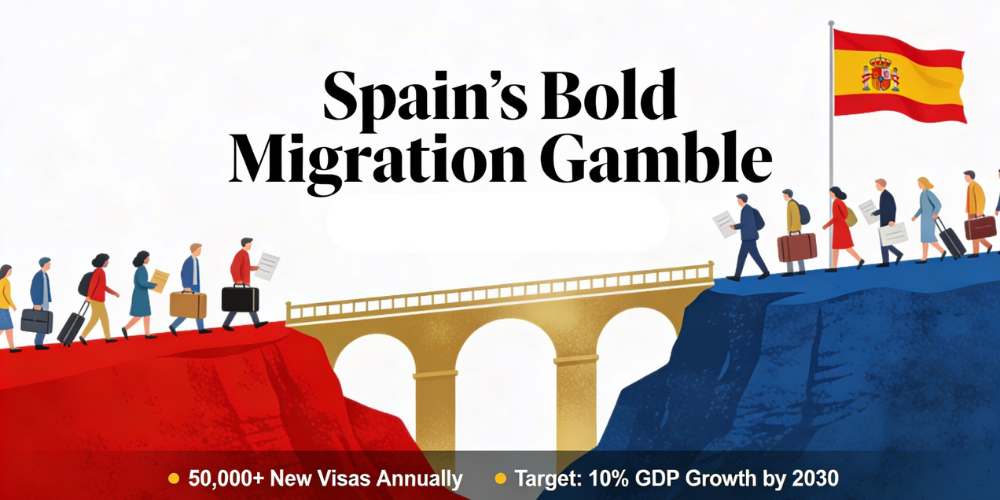
Spain’s Bold Migration Gamble: Opportunity, Bottlenecks, and a Divided Nation
In a Europe increasingly defined by tighter borders, Spain is doing something radically different—
Australia’s Immigration Debate Heats Up: Policy, Politics, and the Battle Over “Values”
Australia’s immigration debate has taken a sharper, more polarised turn after the opposition Coali

Spain’s Bold Immigration Pivot: Legalization Plan Signals a New Direction for Europe
In a moment when much of Europe is tightening its borders and hardening migration policies, Spain is
Europe’s New Entry/Exit System (EES): What Travelers Need to Know in 2026
The ink stamp is fading into history. In its place? Cameras, scanners, and a system that remembers e
Read More
U.S. May End “Duration of Status” for International Students: What It Could Mean in 2026
U.S. Immigration Tightens Again: What “Enhanced Security Checks” Mean for Applicants in 2026
Spain’s Bold Migration Gamble: Opportunity, Bottlenecks, and a Divided Nation
Australia’s Immigration Debate Heats Up: Policy, Politics, and the Battle Over “Values”
Spain’s Bold Immigration Pivot: Legalization Plan Signals a New Direction for Europe
Europe’s New Entry/Exit System (EES): What Travelers Need to Know in 2026

Welcome to the VisaTravel blog. We know that navigating the maze of visa applications and online forms can be as tricky as choosing the perfect travel playlist (which is all we want you worrying about anyway).
Throughout our years of experience, though, we’ve uncovered a mountain of knowledge which, via this blog, we’re sharing with you! Whether you're diving into the world of travel visas, wondering about the ESTA online hustle, or just trying to figure out the DS160 form, think of us as your online concierge, here to make the process easy and most of all, clear.
At this point in our global context, who has time for endless paperwork and confusing legal jargon? No one. That's why we're all about spilling the tea on online visa hacks, easier-to-work-with DS160 forms, and giving you tips on everything from tourist visas to immigration, to that last-minute ESTA online adventure.
So, just plug in a word you’re curious about on the search bar, and boom. We've got the tips, tricks, and insider info to help you (and anyone else you may be traveling with) get to your travel destination with the confidence of a seasoned traveler.
Now go explore!