 U.S. Visa
 Canada eTA
 Schengen Visa
 New Zealand eTA
 United Kingdom eTA
 Australia eVisitor
 Vietnam eVisa
 Egypt eVisa
 Singapore Arrival Card
 Sri Lanka eVisa



--------- U.S. Visa Types Explained: Tourist, Student, Work, and Transit Visas (2026 Guide)
Jan 29, 2026
Before you book flights, pack bags, or start filling out forms, there’s one concept you need to understand: most U.S. visas are nonimmigrant visas.
In U.S. immigration law, non-immigrant means you are going to the United States temporarily and you are expected to leave. You are not moving. You are not immigrating. You are visiting for a clearly defined purpose and a limited period of time.
Broadly, almost all short-term travel to the U.S. falls into four buckets:
- Visit (tourism, business meetings, family visits)
- Study (academic or vocational programs)
- Work (temporary employment or transfers)
- Transit (passing through the U.S. to another country)
What ties all of these together is one critical rule:
You must convince the U.S. government that you do not intend to stay permanently.
This is called proving non-immigrant intent, and it’s one of the most common reasons visas get denied. Applicants must show strong ties to their home country—such as a job, business, studies, property, or family—that make it logical and believable they will return.
In this guide, we’ll break down the four main families of U.S. nonimmigrant visas most travelers use:
- B visas for tourists and business visitors
- F, M, and J visas for students and exchange visitors
- H, L, and O visas for workers
- C visas for transit through the United States
Each serves a very different purpose, and choosing the wrong one can cost you months of time, money, and rejected applications.
At-a-Glance: The Main U.S. Visa Categories
Before diving into details, here’s the big picture of how the main U.S. nonimmigrant visa categories compare:
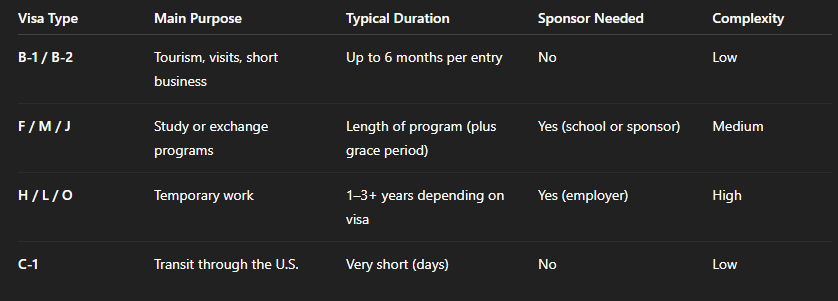
In plain English:
- B-1/B-2 are for short stays and casual purposes.
- F/M/J are for structured programs with schools or sponsors.
- H/L/O are for serious, paperwork-heavy employment cases.
- C-1 is for people who aren’t really “visiting” the U.S. at all—just passing through.
Now let’s start with the most commonly used category in the world: the tourist and business visa.

Tourist & Business Visas (B-1 / B-2)
The B visa is the workhorse of U.S. travel. Millions of people use it every year for vacations, family visits, conferences, and short business trips.
It comes in two flavors: B-1 (business) and B-2 (tourism). In practice, most people receive a combined B-1/B-2 visa that allows both types of activities.
What Is the B-1 Visa?
The B-1 visa is for short-term business activities that do not involve working for a U.S. company.
Permitted B-1 activities include:
- Attending meetings, conferences, or conventions
- Negotiating contracts
- Consulting with business partners
- Participating in short-term training
- Settling an estate
What is not allowed:
- Working for a U.S. company
- Getting paid by a U.S. source (with very limited exceptions)
- Performing services that require a work visa
A simple rule:
If you are producing value or labor in the U.S., you probably cannot do it on a B-1.
What Is the B-2 Visa?
The B-2 visa is for personal, non-business travel, including:
- Tourism and holidays
- Visiting friends or family
- Medical treatment
- Participating in short recreational courses (not for credit)
- Social or amateur events
This is the classic “U.S. tourist visa” most people think of.
B-1/B-2 Combined Visa Explained
In reality, most applicants receive a B-1/B-2 combination visa.
This means:
- You can enter for either business or tourism
- The immigration officer at the airport decides the purpose of each visit
- The same visa sticker covers both uses
It’s flexible, convenient, and extremely common.
Length of Stay and Validity
- Each entry usually allows up to 6 months of stay (decided by the border officer)
- The visa itself may be valid for several years and multiple entries
- The visa expiration date is not the same as how long you can stay per visit
Overstaying even once can seriously damage your chances of getting future U.S. visas.
Eligibility Requirements
To qualify, you must convince the consular officer that:
1. You have proof of funds
You must show you can pay for your trip without working illegally.
2. You have strong ties to your home country
Examples:
- A job or business
- Studies
- Property
- Family responsibilities
3. You have a clear intent to return
This is the heart of the application. If the officer suspects you might try to stay in the U.S., your visa will likely be denied.
Application Process
The B visa process is standardized worldwide:
- Fill out the DS-160 form (online application)
- Pay the visa fee (currently $185)
- Schedule and attend a consular interview
- Bring supporting documents (financial proof, travel plans, ties to home country)
The decision is usually made very quickly—often on the day of the interview.
Who Should Choose This Visa?
You should apply for a B-1/B-2 visa if:
- You’re going to the U.S. for a short visit
- You are not studying in a full-time program
- You are not working for a U.S. employer
- Your trip is clearly temporary
If your real purpose is study or work, using a B visa is one of the fastest ways to get denied or banned.

Student & Exchange Visas (F, M, J)
If you’re going to the U.S. to study or participate in a formal program, a tourist visa is not enough. The U.S. has a separate, tightly regulated system for students and exchange visitors built around approved schools, sponsors, and tracking systems.
There are three main categories:
- F visas for academic study
- M visas for vocational or non-academic training
- J visas for exchange and cultural programs
Each comes with its own rules, limits, and paperwork obligations.
F Visa: Academic Students
The F visa is the most common student visa and is used for academic education.
F-1 vs F-3
- F-1: For full-time students at U.S. universities, colleges, high schools, language programs, and other academic institutions.
- F-3: For Canadian or Mexican students who commute to the U.S. from their home country to study.
Eligible Schools and Programs
You can only use an F visa if your school is:
- SEVP-approved (Student and Exchange Visitor Program)
- Issuing you an official Form I-20
Eligible programs include:
- Universities and colleges
- High schools
- Language training programs
- Other academic institutions
SEVP, I-20, and SEVIS
- SEVP: The government program that certifies schools
- Form I-20: The document your school issues confirming your acceptance
- SEVIS: The tracking system that monitors your enrollment, address, and status
Before applying for the visa, you must:
- Be accepted by an SEVP-approved school
- Receive Form I-20
- Pay the SEVIS fee
M Visa: Vocational Students
The M visa is for non-academic or vocational training.
M-1 Purpose and Limitations
Examples include:
- Culinary schools
- Flight schools
- Technical or mechanical training
- Other professional or trade programs
The M-1 is more restrictive than the F-1:
- You cannot switch easily to academic programs
- Work options are extremely limited
- The government expects you to leave immediately after finishing
Duration Rules and Extensions
- The initial stay is usually up to 1 year
- Can be extended, but no more than 3 years total including extensions
Differences vs F Visa
- F visa = academic, more flexible, more work options
- M visa = vocational, stricter, fewer benefits, tighter time limits
J-1 Exchange Visitor Visa
The J-1 visa is for exchange-based programs, not just study.
Who It’s For
It covers programs like:
- Research scholars
- Professors
- Au pairs
- Interns and trainees
- Cultural exchange participants
Sponsorship Concept
Unlike F and M visas:
- You must be sponsored by an approved exchange organization
- The sponsor, not just the school, controls your program and documentation
- Some J-1 holders become subject to the two-year home residency requirement
Financial & Documentation Requirements
All student and exchange visas require proof that:
- You can pay tuition and living expenses
- You will not work illegally
- You will return home after your program
Typical documents include:
- Bank statements or sponsor letters
- Form I-20 (F/M) or DS-2019 (J)
- Passport, academic records, and visa forms
Work Limitations While Studying
Student visas are not work visas.
- F-1: Limited on-campus work; possible off-campus work only with special authorization
- M-1: Very limited or no work during studies
- J-1: Work only if it is part of the approved program
Working without permission is one of the fastest ways to lose your status and future U.S. visa eligibility.
Who Should Choose Each Student Visa Type?
- Choose F visa if you’re going for academic study
- Choose M visa if you’re going for vocational or technical training
- Choose J visa if you’re joining a sponsored exchange or cultural program
Choosing the wrong category can result in denial or future immigration problems.

Work Visas (H-1B, L-1, O-1)
If you plan to work in the United States, you cannot use a tourist or student visa. You need a petition-based work visa, and the process almost always starts with a U.S. employer.
H-1B: Specialty Occupations
The H-1B is the most famous — and most competitive — U.S. work visa.
Degree Requirement
- The job must require at least a bachelor’s degree
- You must have a degree or equivalent experience
Cap and Lottery System
- There is a yearly limit on how many H-1Bs are issued
- When applications exceed the limit, a lottery decides who gets processed
Employer Sponsorship
- You cannot apply alone
- A U.S. employer must sponsor and petition for you
L-1: Intracompany Transfers
The L-1 is for employees of international companies being transferred to a U.S. office.
L-1A vs L-1B
- L-1A: Executives and managers
- L-1B: Employees with specialized knowledge
Qualifying Company Relationship
- The U.S. and foreign companies must be parent, subsidiary, affiliate, or branch offices
- You must usually have worked for the foreign company at least one year
O-1: Extraordinary Ability
The O-1 is for people at the top of their field.
Fields Covered
- Sciences
- Arts
- Education
- Business
- Athletics
Evidence Standards
You must prove sustained national or international recognition, such as:
- Major awards
- Published work about you
- Leading roles
- High-level achievements
This is not a “talent potential” visa — it’s for proven excellence.
Petition & Approval Process (USCIS First, Then Consulate)
For most work visas:
- The employer files a petition with USCIS
- USCIS approves it
- You then apply for the visa at a U.S. consulate
- Only after that can you travel and work
This makes work visas slower, more expensive, and more complex than tourist or student visas.
How to Choose the Right Work Visa
- H-1B: If you’re a degree-holder hired into a specialty job
- L-1: If you’re transferring inside a multinational company
- O-1: If you’re internationally recognized in your field
If none of these fit, you likely need legal advice before proceeding.
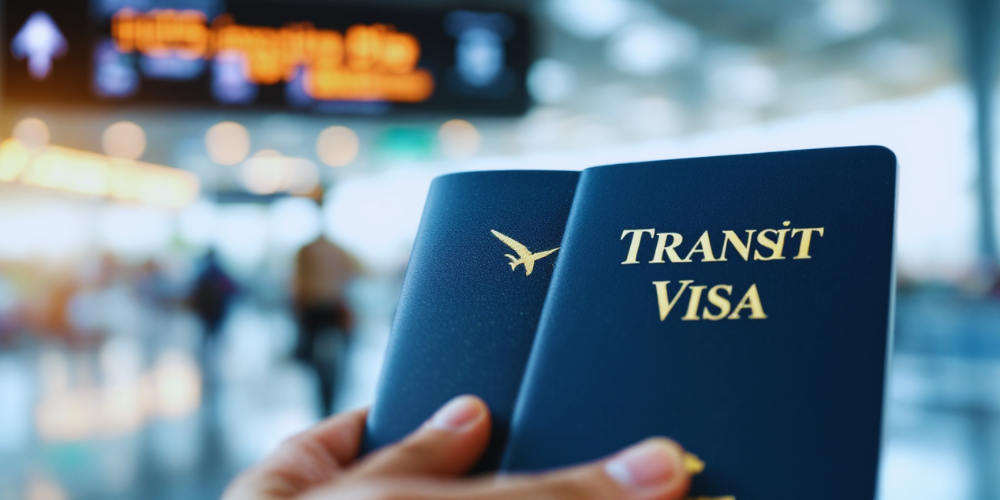
Transit Visas (C-1)
The C-1 transit visa is for people who are not really visiting the U.S. at all — just passing through.
What the C-1 Visa Is For
It allows you to:
- Enter the U.S. briefly
- Travel immediately onward to another country
- Stay only long enough to make your connection
Who Needs a Transit Visa
You may need a C-1 if:
- You have a layover in the U.S.
- You are not eligible for visa-free transit
- You are from a country that requires a visa even for short U.S. stops
C-1 vs C-1/D (Crewmembers)
- C-1: Regular travelers in transit
- C-1/D: Airline and ship crew members
C-1/D specifically excludes certain types of workers, such as fishing vessel crews.
Requirements
To qualify, you must show:
Onward Ticket
- Proof of confirmed travel to another country
Short Stay
- You will remain in the U.S. only briefly
Proof of Ties Abroad
- Evidence that you have reasons to leave immediately
Common Transit Visa Mistakes
- Trying to use transit to sneak in a visit
- Having no clear onward itinerary
- Carrying insufficient proof of the final destination
- Applying for C-1 when a B-1/B-2 is actually needed
How to Choose the Right U.S. Visa for Your Situation
Choosing the right U.S. visa is not about what feels convenient — it’s about what matches your real purpose. The U.S. immigration system is built to detect misuse, and using the wrong category is one of the fastest ways to get denied or flagged for future applications.
Here’s the simplest way to decide:
If You’re Visiting Temporarily
Choose a B-1/B-2 visa if:
- You’re going for tourism, family visits, or a short business trip
- You will not study in a full-time program
- You will not work or be paid by a U.S. company
- Your trip is clearly short and temporary
If your visit involves anything longer-term, structured, or paid, a tourist visa is the wrong tool.
If You’re Studying
Choose:
- F visa for academic programs (universities, colleges, language schools)
- M visa for vocational or technical training
- J visa for exchange or sponsored cultural programs
If your main purpose is education, never apply on a tourist visa. That’s a common reason for denial and future immigration problems.
If You’re Working
You need a petition-based work visa, such as:
- H-1B for specialty occupations
- L-1 for intracompany transfers
- O-1 for extraordinary ability
If a U.S. company is paying you or you’re providing services in the U.S., you must have a work visa. There are almost no exceptions.
If You’re Only Passing Through
Choose a C-1 transit visa if:
- You’re only entering the U.S. to catch another flight or connection
- You will stay for hours or a couple of days at most
- You have confirmed onward travel to another country
If you plan to leave the airport or do any sightseeing, you probably need a B-1/B-2 instead.

Application Process: What All These Visas Have in Common
Despite their differences, most U.S. nonimmigrant visas follow the same basic structure.
DS-160
- The DS-160 is the universal online visa application form
- Almost all non-immigrant visa applicants must complete it
- Mistakes or inconsistencies can cause delays or denials
Fees
- Most visas require a non-refundable application fee
- Some work visas have additional fees paid by the employer
- Fees change, so always verify before paying
Interview
- Most applicants must attend an in-person interview at a U.S. embassy or consulate
- The officer may decide your case in just a few minutes
- Your answers must match your application and documents
Supporting Documents
Depending on the visa, this may include:
- Proof of funds
- School or employer documents
- Travel plans
- Proof of ties to your home country
Documents support your case, but the decision is ultimately based on the interview and legal criteria.
Security and Background Checks
- All applicants go through security screening
- Some cases require additional administrative processing
- This can delay issuance from days to several months
Official Resources & Where to Apply Safely
Always rely on official government sources. Immigration is full of outdated blogs and dangerous advice.
U.S. Department of State
This is where you:
- Apply for visas
- Read official rules
- Find embassy instructions
Key pages:
- Visitor visas
- Student visas
- Transit visas
USCIS
- Handles petitions inside the U.S., especially for work visas
- Your employer usually deals with USCIS before you ever go to the embassy
Why You Must Always Double-Check
- Visa fees change
- Rules change
- Eligibility changes
Never assume last year’s information is still valid.
Conclusion: Picking the Right Visa Saves Time, Money, and Stress
The U.S. visa system is strict, formal, and unforgiving — but it’s also logical.
If you:
- Choose the correct visa
- Match it to your real purpose
- Prepare your application honestly and cleanly
…you dramatically improve your chances of approval.
Most visa problems don’t come from bad luck. They come from choosing the wrong category, using the wrong strategy, or trying to take shortcuts.
Pick the right visa, and the process becomes predictable, manageable, and far less stressful.
Frequently Asked Questions (FAQ)
1. How do I know which U.S. visa is right for me?
Start with your real purpose of travel. If you’re visiting, apply for a B-1/B-2. If you’re studying, you need an F, M, or J. If you’re working, you need a petition-based work visa like H-1B, L-1, or O-1. If you’re only transiting, you may need a C-1. Choosing the wrong category is one of the most common reasons for visa denial.
2. Can I enter the U.S. on a tourist visa and then change to a student or work visa?
In some cases, yes — but it’s risky and heavily scrutinized. If U.S. officials believe you planned to study or work before entering on a tourist visa, they may consider it misrepresentation, which can lead to denial or even a ban. Whenever possible, apply for the correct visa from the start.
3. How long can I stay in the U.S. on a nonimmigrant visa?
It depends on the visa type. Tourist visas usually allow up to 6 months per entry. Student visas last for the duration of your program. Work visas depend on the petition length. Transit visas allow only very short stays. Always check the I-94 record, not just the visa sticker.
4. What is the most common reason U.S. visas get denied?
The most common reason is failure to prove non-immigrant intent — meaning the officer is not convinced you will return to your home country. Weak financial proof, unclear travel purpose, or weak home ties often lead to denial.
5. Do I need a lawyer or agency to apply for a U.S. visa?
Not always. Many people apply on their own successfully, especially for tourist and student visas. However, for work visas, complex cases, prior refusals, or status changes, professional help can significantly reduce risk and mistakes.
Recent Articles

Europe’s New Entry/Exit System (EES): What Travelers Need to Know in 2026
The ink stamp is fading into history. In its place? Cameras, scanners, and a system that remembers e

U.S. Immigration Is Tightening Fast—Here’s What It Means for You in 2026
If you’ve been following U.S. immigration trends, you’ve likely noticed a shift—and it’s not

Visa Tips for Work-From-Anywhere Travelers (2026 Digital Nomad Guide)
The Wi-Fi is strong. The coffee is stronger. You’re answering emails with sand between your toes,
How to Extend Your Stay Legally Beyond a Tourist Visa
At first, the trip feels endless.A few weeks wandering through Manhattan museums. A cross-country ro
Digital Nomad Visas Explained: Where Remote Workers Can Live in 2026
Picture a Tuesday morning that could be anywhere: a laptop open at a café in Lisbon, a coworking de
Top Digital Nomad Visas in 2026 (Portugal, Croatia, Estonia & More)
Remote work isn’t a trend anymore — it’s infrastructure. By 2026, governments aren’t just to
Read More
Europe’s New Entry/Exit System (EES): What Travelers Need to Know in 2026
U.S. Immigration Is Tightening Fast—Here’s What It Means for You in 2026
Visa Tips for Work-From-Anywhere Travelers (2026 Digital Nomad Guide)
How to Extend Your Stay Legally Beyond a Tourist Visa
Digital Nomad Visas Explained: Where Remote Workers Can Live in 2026
Top Digital Nomad Visas in 2026 (Portugal, Croatia, Estonia & More)

Welcome to the VisaTravel blog. We know that navigating the maze of visa applications and online forms can be as tricky as choosing the perfect travel playlist (which is all we want you worrying about anyway).
Throughout our years of experience, though, we’ve uncovered a mountain of knowledge which, via this blog, we’re sharing with you! Whether you're diving into the world of travel visas, wondering about the ESTA online hustle, or just trying to figure out the DS160 form, think of us as your online concierge, here to make the process easy and most of all, clear.
At this point in our global context, who has time for endless paperwork and confusing legal jargon? No one. That's why we're all about spilling the tea on online visa hacks, easier-to-work-with DS160 forms, and giving you tips on everything from tourist visas to immigration, to that last-minute ESTA online adventure.
So, just plug in a word you’re curious about on the search bar, and boom. We've got the tips, tricks, and insider info to help you (and anyone else you may be traveling with) get to your travel destination with the confidence of a seasoned traveler.
Now go explore!