 U.S. Visa
 Canada eTA
 Schengen Visa
 New Zealand eTA
 United Kingdom eTA
 Australia eVisitor
 Vietnam eVisa
 Egypt eVisa
 Singapore Arrival Card
 Sri Lanka eVisa



--------- Digital Nomad Visas Explained: Where Remote Workers Can Live in 2026
Mar 7, 2026
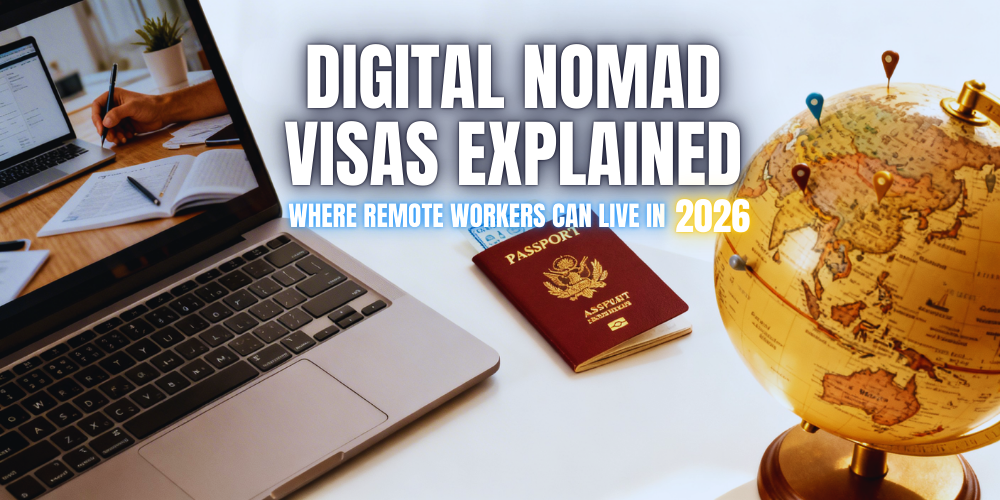
Picture a Tuesday morning that could be anywhere: a laptop open at a café in Lisbon, a coworking desk in Medellín, or a seaside balcony in Split. The emails arrive, the video calls begin, and the workday unfolds just like it would in any office—except the office is now the world.
Remote work has fundamentally reshaped how professionals think about location. What began as a temporary shift during the pandemic has evolved into a lasting trend. Millions of freelancers, entrepreneurs, and remote employees now build careers that move with them, rather than being tied to a single city.
Governments have taken notice. By 2026, dozens of countries—more than 40 by most counts—will offer digital nomad visas designed specifically for remote professionals who want to live abroad while working online.
That raises a practical question many remote workers are now asking: Where can you legally live abroad while working remotely?
This guide breaks it down. Below, you’ll find an overview of how digital nomad visas work, the countries offering them in 2026, the typical requirements and application process, and even the laptops and tools many nomads rely on to stay productive on the road.
What Is a Digital Nomad Visa?
A digital nomad visa is a temporary residence permit that allows remote workers to live in a foreign country while earning income from outside that country.
These visas are designed for people whose work is location-independent—such as remote employees, freelancers, consultants, or online business owners. Instead of entering a country as a short-term tourist, digital nomads can stay legally for extended periods while continuing their professional work online.
Digital nomad visas differ from other types of travel permits in several important ways:
- Tourist visas typically allow short stays (often 30–90 days) and generally prohibit working while in the country.
- Traditional work visas allow employment within the host country, usually with a local employer.
- Digital nomad visas, by contrast, allow individuals to live abroad while working remotely for foreign clients or companies.
This model gives remote professionals legal residency without entering the local labor market.
How Digital Nomad Visas Work
Although each country structures its program differently, most digital nomad visas follow a similar framework.
First, applicants must demonstrate stable remote income. This typically involves providing employment contracts, freelance agreements, or documentation showing that their income originates outside the host country.
Second, digital nomad visas generally allow work only for foreign employers or clients. Applicants are not permitted to take jobs with local companies unless they switch to a different type of work visa.
Finally, these visas are usually issued as temporary residence permits. Many start with an initial validity period—often one year—with the option to renew or extend if eligibility requirements continue to be met.
This approach allows countries to attract international professionals while maintaining clear boundaries around local employment rules.
Core Features of Digital Nomad Visas in 2026
Despite differences between countries, most digital nomad visas share a set of common features.
Typical duration
Most visas allow remote workers to stay for 6 to 36 months, depending on the country and visa type.
Renewal possibilities
Many programs allow renewals or extensions, enabling nomads to remain for several years if they continue meeting the requirements.
Income thresholds
Applicants must usually prove a minimum monthly income, which may range from about $850 to more than €3,500, depending on the cost of living in the destination country.
Health insurance requirements
Most governments require digital nomads to hold private international health insurance that remains valid for the duration of their stay.
Criminal background checks
Applicants often need to provide a clean criminal record certificate, typically issued by their home country and sometimes legalized through apostille procedures.
Together, these requirements ensure that digital nomads can support themselves financially while living abroad.
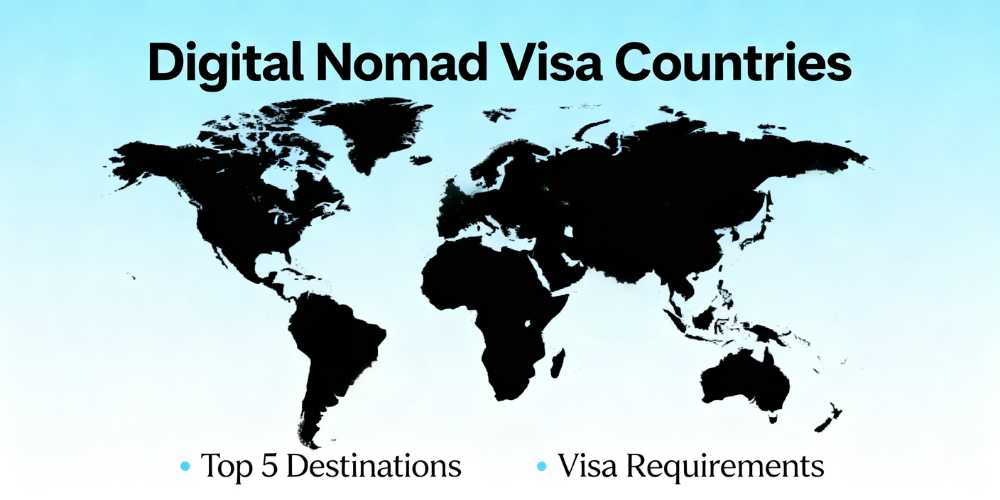
Where Remote Workers Can Live in 2026
The Global Expansion of Digital Nomad Programs
Digital nomad visas have expanded rapidly over the past few years. By 2026, more than 40–55 countries will offer some remote work visa or residence permit aimed at location-independent professionals.
Programs now span nearly every major region of the world.
Europe has emerged as a leader in the digital nomad visa movement, with countries introducing structured programs designed to attract remote professionals.
Latin America has also become a major destination thanks to lower living costs and flexible visa policies.
Meanwhile, Asia and the Middle East are beginning to expand their offerings as governments recognize the economic potential of remote workers.
As a result, digital nomads now have more legal options than ever before when choosing where to live and work abroad.
What Makes a Country Attractive for Digital Nomads
Not all digital nomad destinations are created equal. Beyond visa eligibility, remote workers typically evaluate several factors before choosing where to relocate.
Cost of living
Affordability often plays a major role. Countries with lower living costs allow remote workers to stretch their income while maintaining a comfortable lifestyle.
Internet infrastructure
Reliable high-speed internet is essential for remote work, especially for professionals who rely on video calls, cloud platforms, or large file transfers.
Remote-worker communities
Cities with established nomad communities often provide coworking spaces, networking events, and social support networks that make relocation easier.
Climate and lifestyle
Weather, cultural experiences, and outdoor activities can also influence where digital nomads decide to live.
Visa flexibility
Finally, the visa itself matters. Programs that offer longer stays, straightforward applications, and clear renewal options tend to attract the most international remote workers.
Together, these factors shape the growing global map of digital nomad destinations.
10 Highlight Digital Nomad Visas for 2026
Remote work visas are now a serious part of global immigration policy. More than 50 countries offer dedicated programs designed to attract freelancers, entrepreneurs, and remote employees who earn their income online. Below are ten standout destinations in 2026, balancing practical visa rules with strong infrastructure, lifestyle appeal, and thriving nomad communities.
Spain Digital Nomad Visa
The digital nomad visa introduced by Spain has quickly become one of the most popular options for remote professionals who want access to Europe.
Duration and renewal options
The visa typically begins with a 1-year residence permit and can be renewed for up to five years total, potentially opening the door to longer-term residency.
Income requirement
Applicants generally must demonstrate a monthly income of around €2,160–€2,760, depending on updated guidelines and family status.
Lifestyle benefits and Schengen access
Living in Spain means access to the entire Schengen Area, making travel across most of Europe easy. Cities such as Barcelona, Madrid, and Valencia are major remote-worker hubs with coworking spaces, reliable infrastructure, and a vibrant international community.
Portugal Digital Nomad Visa (D8)
The D8 visa offered by Portugal is widely regarded as one of the most attractive long-term options for remote workers.
It typically allows 1–2 years of residence, with renewals available and the possibility of transitioning toward permanent residency or citizenship over time. Income requirements are based on roughly four times the Portuguese minimum wage, which often translates to around €3,000–€3,700 per month.
Portugal’s appeal goes beyond the visa itself: a mild climate, excellent safety rankings, strong English proficiency, and thriving remote-work communities in Lisbon, Porto, and Madeira.
Estonia Digital Nomad Visa
The Baltic nation of Estonia was one of the first countries in the world to launch a dedicated digital nomad visa.
The visa typically allows up to one year of residence, with both short-stay and long-stay options depending on the applicant’s plans. Remote workers must usually show an income of around €3,500–€4,500 per month.
Estonia is particularly attractive for tech workers due to its advanced digital infrastructure, widespread e-government services, and its well-known Estonian e‑Residency program, which allows entrepreneurs to run companies remotely.
Croatia Digital Nomad Residence
Remote workers looking for Mediterranean scenery often turn to the digital nomad residence permit in Croatia.
The program generally allows stays of up to 12 months, though applicants can reapply after leaving the country for a period of time. Income requirements usually fall between €2,300 and €3,300 per month.
Croatia’s biggest draw is lifestyle: historic coastal cities like Dubrovnik and Split, beautiful Adriatic beaches, and a lower cost of living compared with Western Europe.
Georgia “Remotely from Georgia” Program
The “Remotely from Georgia” initiative introduced by Georgia has become a favorite among budget-conscious digital nomads.
The program generally allows stays of up to one year, with relatively flexible entry conditions. Many guides reference a typical income expectation of around $2,000 per month, though requirements may vary.
The capital, Tbilisi, has developed a lively nomad culture thanks to its affordable living costs, fast internet, and welcoming visa policies.
Germany Freelance / Self-Employed Visa
Unlike dedicated nomad visas, Germany offers a freelance or self-employment residence permit, commonly used by remote workers and independent professionals.
Rather than a fixed income threshold, applicants must demonstrate stable freelance work, a viable client base, and sufficient financial resources. Many successful applicants are designers, developers, writers, or consultants with international clients.
Berlin has become a major hub for freelancers due to its startup culture, coworking spaces, and diverse international community.
Malta Nomad Residence Permit
The Mediterranean island nation of Malta offers a dedicated Nomad Residence Permit aimed at remote professionals.
The permit can last up to three years with renewals and typically requires a minimum monthly income of around €3,500.
Malta is especially appealing to English-speaking nomads, as English is widely used in business and government. Combined with its coastal lifestyle and European location, it has become a growing digital nomad destination.
Hungary White Card Visa
Hungary introduced the White Card, a residence permit specifically designed for remote workers.
The visa typically allows up to two years of residence and requires an income of approximately €3,000 per month.
Budapest has become a rising digital nomad hotspot due to its combination of historic architecture, lively cultural scene, and relatively affordable cost of living compared to other European capitals.
UAE Virtual Working Programme (Dubai)
For professionals seeking a tax-friendly destination, the Virtual Working Programme in the United Arab Emirates—particularly in Dubai—is a popular option.
The program typically allows one-year renewable residence, requiring proof of employment and a monthly income of around $3,500–$5,000.
A major advantage is the UAE’s 0% personal income tax, combined with world-class infrastructure, global connectivity, and a strong international business environment.
Colombia Digital Nomad Visa
In Latin America, the digital nomad visa offered by Colombia has rapidly gained attention.
The visa can allow up to two years of residence and often requires an income of around $1,000–$1,200 per month, making it one of the more accessible options globally.
Cities such as Medellín and Bogotá attract remote workers with their lower living costs, dynamic culture, and growing coworking ecosystems.
Full List of Digital Nomad Visa Countries
While the programs above are among the most widely discussed, dozens of countries now offer some form of visa or residence permit designed for remote workers.
Additional Countries Offering Remote Work Visas
Beyond the headline destinations, remote workers can also explore programs in countries such as:
- Latvia
- Brazil
- Costa Rica
- Barbados
- Iceland
- Thailand
Many of these visas follow similar models: allowing remote workers to stay legally while earning income from outside the host country.
Regions Leading the Nomad Visa Movement
Europe
Europe has emerged as the global leader in digital nomad visas. Countries across the European Union and nearby regions—such as Portugal, Spain, Croatia, and Estonia—have introduced structured programs that combine legal residency with strong infrastructure.
Latin America
Latin America has become increasingly attractive for remote workers thanks to lower living costs and relaxed visa requirements. Nations such as Colombia, Brazil, and Costa Rica have introduced programs aimed specifically at location-independent professionals.
Asia and Emerging Destinations
Several Asian countries are beginning to expand their offerings as well. Programs in places like Thailand and the UAE show how governments are competing to attract remote professionals with favorable visa policies and modern infrastructure.
Typical Eligibility Requirements in 2026
Although digital nomad visas differ by country, most programs share a core set of eligibility requirements designed to verify that applicants are financially stable and working remotely.
Proof of Remote Income
Applicants usually must demonstrate that their income comes from outside the host country.
Common forms of proof include:
- Employment contracts from foreign companies
- Freelance agreements or client contracts
- Business ownership documents for entrepreneurs running remote companies
These documents help immigration authorities confirm that the applicant will not compete in the local labor market.
Minimum Income Thresholds
Most digital nomad visas require a minimum monthly income to ensure applicants can support themselves while living abroad.
Typical ranges include:
- $850–$1,500 per month in some Latin American destinations
- €2,000–€3,500 per month across many European countries
- $3,500–$5,000 per month in higher-cost locations such as Dubai
Income thresholds often increase when applicants bring spouses or dependents.
Health Insurance Requirements
Applicants generally must carry private international health insurance valid in the host country.
Some countries also require policies with minimum coverage limits or proof that the insurance includes hospitalization and emergency treatment.
Criminal Background Checks
Most visa programs require a clean criminal record certificate issued by the applicant’s home country.
These documents often need to be apostilled or legalized before submission to meet international document verification standards.
Accommodation and Residency Proof
Applicants may also need to demonstrate where they will live upon arrival.
Acceptable documentation can include:
- A rental agreement
- A long-term hotel booking
- A letter from a host or property owner confirming accommodation
Documents You Usually Need to Apply
While requirements vary by country, digital nomad visa applications typically involve submitting several key documents.
Common paperwork includes:
- Valid passport with at least 6–12 months remaining validity
- Completed application forms from the relevant embassy or immigration authority
- Recent passport photos meeting official size guidelines
- Bank statements showing financial stability and income history
- Proof of remote work, such as contracts or employer letters
- International health insurance policy valid in the host country
- Police clearance certificate confirming no serious criminal history
- Accommodation proof, such as a lease agreement or booking confirmation
Preparing these documents in advance can significantly speed up the application process for most digital nomad visa programs.
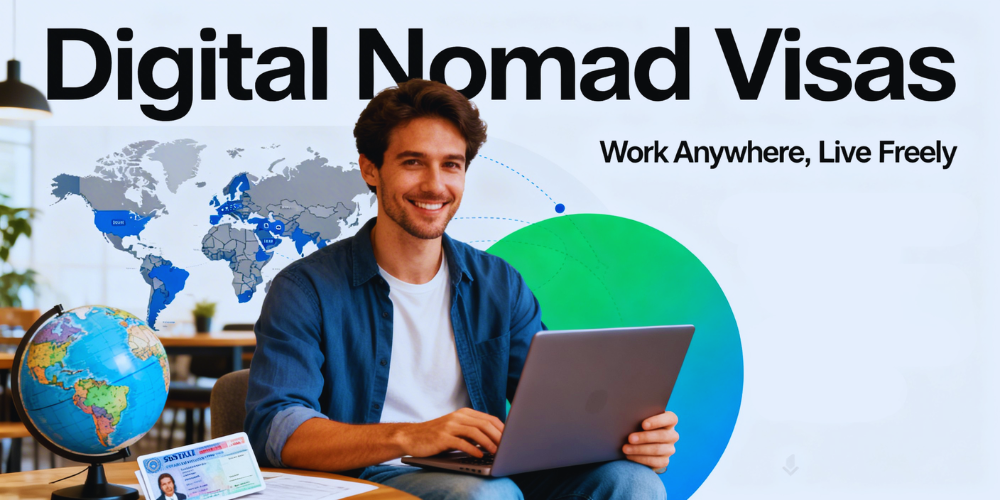
How to Apply for a Digital Nomad Visa (Step-by-Step)
Remote work may feel borderless, but digital nomad visas still run on bureaucracy. The good news: most countries follow a similar application flow. Once you understand the system, the process becomes straightforward.
Choose the Right Country
Start with research. Digital nomad visas vary widely depending on the country.
Focus on three core factors:
- Minimum income requirement (often $2,000–$5,000 per month)
- Length of stay (typically 6 months to 2 years)
- Tax implications for remote workers
Some countries prioritize freelancers and entrepreneurs, while others favor full-time employees working for foreign companies. Carefully review official government portals to confirm the eligibility rules before applying.
Gather Required Documents
While requirements differ by country, most applications require a similar document package:
Typical checklist:
- Valid passport
- Proof of remote employment or freelance contracts
- Minimum income verification (bank statements or payslips)
- Health insurance coverage valid in the destination country
- Criminal background check
- Proof of accommodation (sometimes required)
- Completed visa application form
Having these documents prepared in advance significantly speeds up the application process.
Submit the Application
Most digital nomad visas are submitted through one of two channels:
Online government portals
- Increasingly common in countries promoting remote workers
Embassies or consulates
- Some nations still require in-person document submission
Application fees usually range between $50 and $500, depending on the program.
Wait for Approval and Enter the Country
Processing times typically range from two weeks to two months.
Once approved, you will usually receive either:
- A visa sticker in your passport, or
- An approval letter that allows entry and final processing after arrival.
Make sure to enter the country within the validity window specified in your approval notice.
Register Locally After Arrival
Many digital nomad visas require local registration after entry.
This step may involve:
- Applying for a residence card
- Registering your address with local authorities
- Completing biometric identification
Missing this step can invalidate your visa status, so it is important to complete local registration within the required timeframe (often 7–30 days).
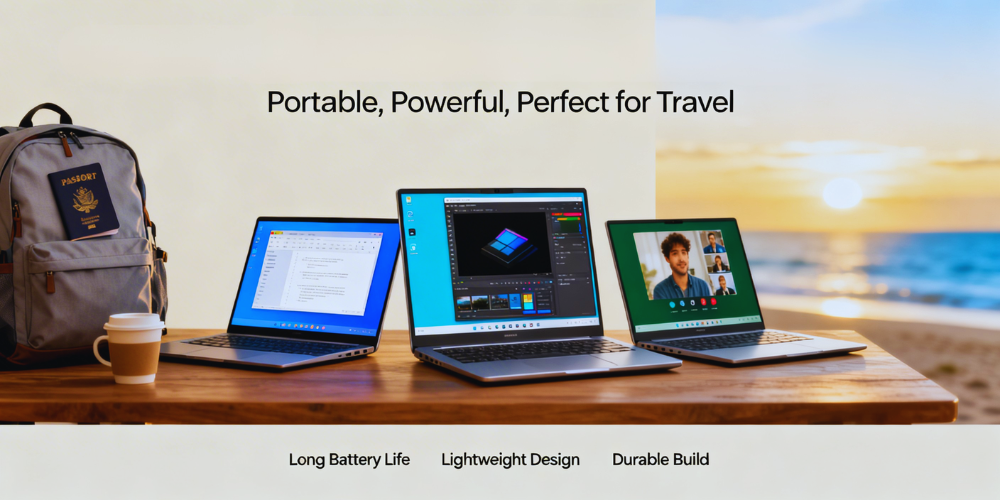
Best Laptops for Digital Nomads in 2026
For digital nomads, a laptop is not just a device—it is the entire office. Reliability, portability, and battery endurance can determine whether you work smoothly from a beach café or scramble for power outlets in airports.
What Digital Nomads Need in a Laptop
Before choosing a device, focus on the features that matter most for location-independent work.
Portability
Nomads move frequently. A laptop under 1.4 kg (3 lbs) makes a noticeable difference when traveling with carry-on luggage.
Battery Life
Working in transit is common. Aim for laptops with 10–18 hours of battery life to survive flights, trains, and long café sessions.
Connectivity
Look for:
- Wi-Fi 6 or Wi-Fi 6E
- Multiple USB-C or Thunderbolt ports
- Reliable Bluetooth for accessories
Reliability for Remote Work
A nomad laptop must handle video calls, productivity apps, cloud platforms, and sometimes light creative workloads without lag.
Top Laptop Picks for Remote Workers
Here are some of the most popular laptops among digital nomads in 2026.
MacBook Neo (2026)
A new entry-level Mac designed for portability and affordability, making it attractive for freelancers and remote professionals who want the Apple ecosystem without the premium price.
MacBook Air (M-series)
Still one of the best travel laptops available. It combines silent operation, exceptional battery life, and powerful performance in an ultra-thin body.
Dell XPS 13
A premium Windows ultrabook known for its compact design, sharp display, and strong performance for professionals working across productivity and creative tools.
Lenovo ThinkPad T-Series
The workhorse of business laptops. Durable, secure, and keyboard-focused—ideal for heavy writing, coding, or corporate remote work.
Acer Swift Series
A strong value option with lightweight builds, solid battery life, and competitive pricing for remote workers who want dependable performance on a budget.
Why the MacBook Neo Is a Strong Budget Option
Among newer devices targeting remote professionals, the MacBook Neo stands out as a compelling entry-level choice.
Lightweight Design
The device is designed for portability, making it ideal for travelers who frequently move between airports, coworking spaces, and short-term accommodations.
Long Battery Life
Like other modern Apple laptops, the Neo prioritizes battery efficiency—an essential feature for digital nomads who often work without easy access to power outlets.
Affordable Entry-Level Mac Laptop
For many remote workers, the Neo represents the most accessible entry point into the macOS ecosystem, offering the reliability and software compatibility of a Mac at a lower price than flagship models.
For digital nomads seeking a balance between cost, performance, and portability, it may quickly become one of the most practical travel laptops available.
Key Takeaways: Choosing the Right Digital Nomad Visa
With dozens of countries now offering digital nomad visas, the best choice ultimately depends on your work style, financial situation, and long-term travel goals. Some destinations focus on affordability, while others emphasize business ecosystems or tax incentives.
Here are some common profiles and the types of visas that tend to work best.
Best Visas for Long-Term Residency Paths
Some digital nomad visas allow renewals or transitions into longer-term residence permits, making them ideal for travelers who may want to settle abroad.
Countries offering clearer long-stay options often provide:
- Renewable nomad visas (1–2 year extensions)
- Residency conversion pathways
- Opportunities to transition into permanent residence
These programs are popular among freelancers, entrepreneurs, and remote workers looking to build a semi-permanent international lifestyle.
Best for Low Cost of Living
For many remote workers, affordability is a major factor when choosing a destination.
Countries with lower living costs allow nomads to stretch their income further while enjoying a comfortable lifestyle.
Key benefits of these destinations include:
- Affordable housing
- Lower daily expenses
- Strong nomadic communities
- Access to coworking spaces and digital infrastructure
These locations are often favored by freelancers, startups, and early-stage entrepreneurs.
Best for Tech-Friendly Environments
Some countries actively market themselves as remote-work hubs with strong digital ecosystems.
These destinations typically offer:
- Fast internet infrastructure
- Startup-friendly policies
- Coworking hubs and innovation centers
- Networking opportunities for entrepreneurs and developers
For tech professionals, founders, and digital creators, these environments can provide both productivity and community.
Best for Tax Advantages
Tax policies vary widely across digital nomad visa programs. Some countries offer temporary tax exemptions or simplified tax treatment for foreign remote workers.
However, tax obligations may still apply depending on:
- The length of stay
- Your home country’s tax laws
- Local residency definitions
Because tax situations can become complex, many digital nomads consult international tax advisors before choosing a destination.
Final Thoughts: The Future of Remote Work Abroad
Digital nomad visas represent one of the fastest-growing trends in global mobility.
As remote work becomes normalized across industries, countries increasingly view location-independent professionals as an economic opportunity rather than a regulatory challenge.
Global Competition for Digital Nomads
Governments around the world are competing to attract skilled remote workers who contribute to local economies without competing directly for domestic jobs.
This competition has already led to:
- More visa programs
- Lower income thresholds in some countries
- Improved digital infrastructure
- Dedicated nomad communities and coworking ecosystems
Expanding Visa Options and Changing Rules
Digital nomad visas continue to evolve quickly.
New programs launch every year, while existing ones adjust requirements related to:
- Minimum income
- Application procedures
- Tax rules
- Length of stay
For remote workers planning international moves, staying informed about these updates is essential.
Always Verify Official Sources
While online guides can provide useful overviews, visa requirements can change frequently.
Before applying, always confirm details through official government websites, embassies, or immigration authorities to ensure you are following the most current rules.
Resources and Further Reading
If you plan to pursue a digital nomad visa or build a remote-work lifestyle abroad, the following resources can help you research destinations and prepare your application.
Digital Nomad Visa Program Lists
Several international travel platforms maintain updated lists of countries offering digital nomad visas, including eligibility requirements and minimum income thresholds.
These lists provide a quick overview of available options across Europe, Asia, the Americas, and beyond.
Official Government Visa Pages
The most reliable information always comes directly from government immigration websites or embassy pages.
These sources provide:
- Official application instructions
- Document requirements
- Processing timelines
- Updated policy changes
Checking these sources helps avoid outdated or incorrect information.
Digital Nomad Visa Comparison Guides
Comparison guides can help remote workers evaluate programs based on:
- Cost of living
- Income requirements
- Internet infrastructure
- Visa duration
- Tax considerations
These guides are especially useful when narrowing down potential destinations.
Laptop and Remote Work Gear Resources
Because remote professionals depend heavily on their equipment, many digital nomads also consult technology guides when preparing for long-term travel.
These resources often cover:
- Lightweight travel laptops
- Portable monitors
- Travel routers and mobile hotspots
- Noise-canceling headphones
- Portable power banks and adapters
The right combination of tools can significantly improve productivity when working across time zones and locations.
Frequently Asked Questions (FAQ)
1. What is a digital nomad visa?
A digital nomad visa is a residence permit that allows remote workers to live in a foreign country while earning income from employers or clients located outside that country. Unlike tourist visas, these permits typically allow longer stays—often six months to two years—and may be renewable if the applicant continues to meet income and eligibility requirements.
2. How much income do you need for a digital nomad visa?
Income requirements vary widely depending on the destination. Some countries require as little as $850–$1,500 per month, while others require €3,000 or more. Higher-cost destinations generally have higher income thresholds, especially if applicants plan to bring family members.
3. Which countries offer digital nomad visas in 2026?
By 2026, more than 40–55 countries will offer digital nomad or remote work visas. Popular destinations include Spain, Portugal, Estonia, Croatia, Colombia, and United Arab Emirates. Each program has different rules regarding income, duration of stay, and application requirements.
4. How long can you stay on a digital nomad visa?
Most digital nomad visas allow remote workers to stay between 6 months and 2 years initially. Some countries allow renewals or extensions, making it possible to remain abroad for several years if eligibility requirements are maintained.
5. Do digital nomads have to pay taxes in the country they move to?
Tax obligations depend on the destination country and how long you stay there. Some digital nomad visas offer temporary tax benefits, while others may require paying local taxes after becoming a tax resident. Because international tax rules can be complex, many digital nomads consult tax professionals before relocating abroad.
Recent Articles

Spain’s Bold Migration Gamble: Opportunity, Bottlenecks, and a Divided Nation
In a Europe increasingly defined by tighter borders, Spain is doing something radically different—

Australia’s Immigration Debate Heats Up: Policy, Politics, and the Battle Over “Values”
Australia’s immigration debate has taken a sharper, more polarised turn after the opposition Coali
Spain’s Bold Immigration Pivot: Legalization Plan Signals a New Direction for Europe
In a moment when much of Europe is tightening its borders and hardening migration policies, Spain is
Europe’s New Entry/Exit System (EES): What Travelers Need to Know in 2026
The ink stamp is fading into history. In its place? Cameras, scanners, and a system that remembers e

U.S. Immigration Is Tightening Fast—Here’s What It Means for You in 2026
If you’ve been following U.S. immigration trends, you’ve likely noticed a shift—and it’s not
Visa Tips for Work-From-Anywhere Travelers (2026 Digital Nomad Guide)
The Wi-Fi is strong. The coffee is stronger. You’re answering emails with sand between your toes,
Read More
Spain’s Bold Migration Gamble: Opportunity, Bottlenecks, and a Divided Nation
Australia’s Immigration Debate Heats Up: Policy, Politics, and the Battle Over “Values”
Spain’s Bold Immigration Pivot: Legalization Plan Signals a New Direction for Europe
Europe’s New Entry/Exit System (EES): What Travelers Need to Know in 2026
U.S. Immigration Is Tightening Fast—Here’s What It Means for You in 2026
Visa Tips for Work-From-Anywhere Travelers (2026 Digital Nomad Guide)

Welcome to the VisaTravel blog. We know that navigating the maze of visa applications and online forms can be as tricky as choosing the perfect travel playlist (which is all we want you worrying about anyway).
Throughout our years of experience, though, we’ve uncovered a mountain of knowledge which, via this blog, we’re sharing with you! Whether you're diving into the world of travel visas, wondering about the ESTA online hustle, or just trying to figure out the DS160 form, think of us as your online concierge, here to make the process easy and most of all, clear.
At this point in our global context, who has time for endless paperwork and confusing legal jargon? No one. That's why we're all about spilling the tea on online visa hacks, easier-to-work-with DS160 forms, and giving you tips on everything from tourist visas to immigration, to that last-minute ESTA online adventure.
So, just plug in a word you’re curious about on the search bar, and boom. We've got the tips, tricks, and insider info to help you (and anyone else you may be traveling with) get to your travel destination with the confidence of a seasoned traveler.
Now go explore!